Wednesday, June 28, 2006

Moi, j'ai parler a Vincent Kenis


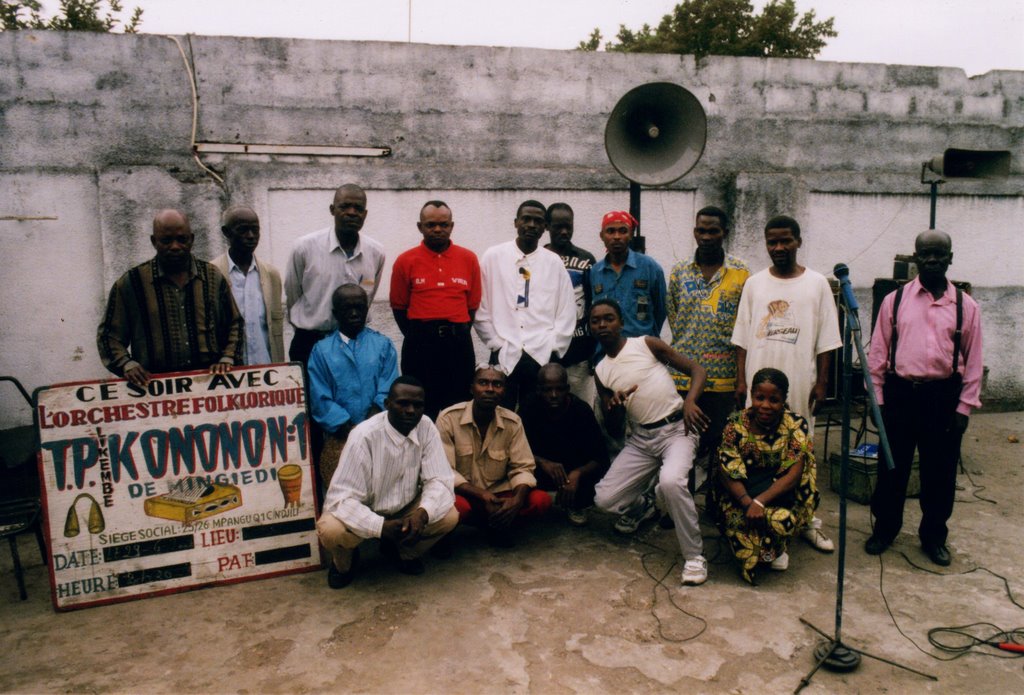
Due to an inability to get through to Blogger while in Ethiopia, here is the long delayed interview, as promised, with Vincent Kenis, producer of the Congotronics series. It an interview that is in the Mirror as a run up to Konono No. 1's performance at the Montreal Jazz Fest. I could only use a tiny bit of the following interview, but I really found Kenis interesting...I'd like to speak to him again sometime.

EM: You initially heard Konono No. 1 on the radio in the late seventies and then went to the Congo to find them in 1989. What drove you to do this?

VK: I already had some experience with modern Congolese music. I had been there in ’71 and stayed one week in Kinshasa. I was really intrigued by popular Congolese music. I heard all sorts of stuff—tradi-modern music. So, in ’79, when I heard this it was like a concentration of everything. At that time I was playing in a New Wave punk band with a lot of emphasis on distortion. I also played a lot with Congolese artists such as Luambo Franco and OK Jazz and Koffi Olomide. So this led me to be sensitive to Congolese music in general. There is, of course, wonderful traditional music.

EM: Is there anything that characterizes Congolese music?

VK: When it became popular in Africa in the sixties it was mainly guitars with echo and delay with very sweet harmonies. And there was a very lively second part when people get on dancing and the horns were more prevalent in the 70s. On top of that, Congo is like a subcontinent. It is huge. Kinshasa is a capital of a huge area of traditional music which is constantly fusing, and this is what makes it so strong and so fascinating, for me.

EM: Band leader Mingiedi has been quoted as saying that he needed to amplify his likembe to compete with city noise. What do you think about this pragmatic need to connect traditional music with technology?

VK: They make music with what they have. And they happen to have that kind of equipment and to circumvent it to get a new sound, a new way of playing the music. In the beginning, you need to find what sounds the best, what sounds the loudest. After a while, they just choose between all the junk they have—what junk sounds better than the rest of the junk. Now they are opening up to new sounds, new possibilities. They never had a proper PA before, and it’s a question of balancing the ugly, dirty sounds they always had with more comfortable sounds. Also, they never had good bass amplification. It’s not like in Jamaica, you don’t have soundsystems that big in the Congo. It’s always a bit tinny, happening in the mid-treble. They discovered sub-bass and have been getting into it, exploiting it. It’s really interesting. The sub-bass element of their music was really suggested while we were pre-mixing the stuff right after the recording sessions. It was quite a novelty, the technology.

EM: As a producer, from the west, going to the Congo, recording music, what are the challenges for you? How do you view your role?

VK: Myself, I have an experience as a Congolese musician, so to speak. I discovered Congolese music through the Cuban side. I have no colonial past, personally. I met Congolese musicians because they played in the same Afro-Cuban bands as I did. So I became friends with a lot of people and people know me in the Congolese music circles as the one white guy who played with Franco. I’m part of the family. I’ve played in Kinshasa with a lot of people. People know me for being that before they know me for being a Belgian. They don’t care if I’m a Belgian or not, as long as I can make them laugh! (laughs)

Of course we discuss and we have our views on politics, but, you know, I’m not the king of Belgium. It’s not a problem.

EM: How important do you think it is to have an understanding of the place, the context in which music is created?

VK: The more music travels, the more it needs to state where it comes from. I’m really excited about internet possibilities, to help join the diaspora from the Congo. That is one of the plans we have, to play music with people from Brazil, Belize, and Cuba. We send them the songs, they send us back overdubs and we decide with the musicians how it is going to be.

People tell me about the DVD that they understand the music so much better after they saw the pictures. It suddenly makes sense, you know? Some sounds, the drums are really complicated, but as soon as you see the dancer dancing to it, you see that it is a very very rigorous and very skillful affair and you just get captivated. You have to show where you come from.

We’re in the process of mixing, for instance Kasai Allstars is a mix of all different groups who had never dreamt of playing together until this Belgian idiot, this naïve guy, said “Why don’t you play together?” They said, “but we don’t have the same scale.” I said, “why don’t you build a scale and transfer the scale of the other guy and I’ll pay for it?” You know, get together and it’s a constant flux of cultural action between these musicians. And this is the way it has always been. They are not really tribalistic in that sense. For example, Swede Swede, which I produced a long time ago was supposed to be a pure group from the Mongo region. But the lokole player, lokole is a really traditional Mongo drum, was from Kasa, a completely different region and he was well accepted. This is in Kinshasa, I don’t know about the rest of the country, except for the south part. But Konono No. 1 are very much into experimentation and new things. And they are senior citizens! They are not into tribalism. But I hope it doesn’t come back with the elections, that’s my fear.

EM: With the positive things about technology, there must also be a negative side?

VK: Of course there is going to be more experimentation, and there is going to be more challenge from that. The founder of Konono No. 1 is 73 years old, he is not going to change a thing. But the rest are open to many new things and technology. Maybe they have never thought of their sound as an object to watch, to compare to others. They see now and are quite conscious of textures of sounds in records they hear [in Europe]. They know that their distortion is unique.

At first, it was a question of prestige. “I am the boss I must have the big amplifier, no matter what it sounds like.” It had nothing to do with an experiment with the music

As soon as you go through this and you say, hey we are making music, lets be comfortable, let’s try this, let’s try that, I think technology just finds its space naturally, The fascination for technology lasts as long as you don’t talk about music. And I’m there to talk music, to propose sounds, to propose solutions. The fact that I have the computer and I can mix all the time with them, the object is in the making and the question is what do I want it to sound like. It is not a question of technology versus tradition. It is just making a musical object that works. And that’s it, and that’s what my ambition is.

EM: Konono No.1 has been around for quite some time and, apparently, is seen as passé. What do you think about new music coming out of the Congo?

VK: I wouldn’t want to describe it, actually. It seems to be quite stagnant at the moment. I must say, I haven’t been around Kinshasa as a talent scout for a very long time. I’ve been just working with people I already know for the last three years. I’ve heard there is a hip hop scene growing. But, the main thing you hear in the streets, for my taste it is terrible, religious music. The new churches are really powerful there. They are the only ones who can afford big PA systems so they are really loud and they play gospel, basically. The last authentically Congolese group, and I use authentic knowing that, in the Congo, it is suspect, its members are at least forty years old, so the younger generation has nothing to refer to, so they take what’s around. So it is gospel music. They get into R&B also, but this is only the rich kids and there are not so many [of them]. Most of the people just play music with what they have. They invent instruments in the backyard and anything goes. It is a very very poor situation in Kinshasa. I’ve been in Bamako, [Mali] it looks like Switzerland to me compared to Congo. Not so many people have access to the outside world and they haven’t been used to look for it. Now they have to because nothing much is happening.

EM: Does the international popularity of the Congotronics series get back to the Congo?

VK: Maybe not now, maybe later. I think the new generation is bound to like this sound very much. Because it is really close to what hip hop or dance music sounds like when you have nothing at all but chairs and brooms and stuff like that to hit on. This music is unique in the world and they are going to incorporate it, I am sure. I hope so, anyway! If not, we’ll make some in my basement in Brussels.

Konono No. 1

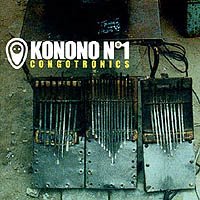
Last year, I wrote the following review. I'm posting it here because next week I'll post a long version of an interview with Congotronics series producer Vincent Kenis. Also, this should remind any of the three people that read this blog that they should run, not walk, to get tickets to see Konono No. 1.
Konono no. 1
Congotronics
(Crammed)


I'm a big fan of loud music. When I say loud I mean King-Tubby-overclocking-amplifiers loud. Any piece of music, any sound, from banjo to bass beat, takes on a whole new life when it is cranked up at top volume. Sound, sound and more sound. Konono no. 1, a group from an area of Africa between Angola and the Congo seem to understand this very well.

Mingiedi, who founded the group 25 years ago, is a likembe (thumb piano) virtuoso of the highest order. Konono no. 1 make use of three likembes, a rhythm section, three singers, and three dancers. The sound is pumped through makeshift amplifiers and speakers that have been carefully culled together from old car parts. Bits and pieces of cars drive (pardon the pun) the rhythm section with hubcaps and other scraps of metal--including old pots and pans--acting as cymbals, drums, and other assorted noisemakers. Needless to say, you probably haven't heard anything else like this. Ever.

Whistles and song collide with dizzying, crashing rhythms, creating music that is nothing short of amazing. It's essentially super-charged traditional Bazombo trance music, but it sounds like something you wouldn't be surprised to hear paired with a touch of M.I.A.'s "Galang Galang". I don't mean to suggest that this is pop in any way, shape or form, but it's serious, bass heavy dance music, with a punky, rockus edge. Some have compared it to Autechre, some have drawn comparisons to Diamanda Galas. Whatever it is, these guys have been at it for years and they certainly know how to move a crowd.

I, for one, am excited to know that Crammed disc's Congotronics series doesn't begin and end with this record. There's more where this came from. So throw it on the CD, crank up the bass, and don't worry about the neighbours.

Wednesday, June 14, 2006

This isn't too much fun...

I tend to read the blog Meskel Square quite a bit. It's by British journalist Andrew Heavens, who happens to live and report from Addis Ababa. In recent weeks, Heavens (who is also a pretty incredible photographer btw-check the picture of a child in Harar that accompanies this entry) has blogged about how the Ethiopian government is censoring the internet. Numerous blogs, in fact all that utilize the Blogger platform, are inaccesible from within the country. There goes my idea to write about my trip while in Shashemene next month...

This action is indicative of a much larger problem than simply thwarting my silly travel musings. Amnesty International, alongside the Observer, have begun a campaign called "irrepressible.info" bent on ending online repression of speech.

Read about it, and then stick one of these on your blog:

Tuesday, May 02, 2006

Finding this made me so happy!


I haven't seen this since I was about 10.

Sunday, April 23, 2006

Yeah, so I was a mathlete too. So what?

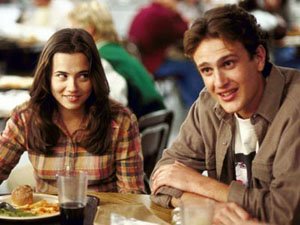
Here's a little extended version of a piece I wrote for FlowTV. It is, admittedly, quite snarky, but I do like my description of Freaks and Geeks. Though I wrote this a couple of years ago, my love for that show has not abated. I would, however, like to know if there's any tv-obsessed folk out there who know if there's been any writing on the tv-on-dvd phenomenon. I'm a little behind on my tv-crit...

My Own Private TV

With the “TV on DVD” phenomenon in full effect (Golden Girls, My Little Pony and Friends, and Too Close for Comfort have all been released on DVD), almost any show you’ve ever loved that’s been either relegated to reruns or sporadic glimpses on various cable channels is available for a small fee from Amazon.com. As an absolute TV junkie, I’m happy that I can get a hold of my favorite small-screen gems in their pristine, commercial-less form rather than buying some crappy VHS version off Ebay.

Thing is, for those of us who were, for many years, in the business of trading copies of television shows, what does this all mean? My somewhat fuzzy full season of The Ben Stiller Show was a prized possession that became worthless on 11 December 2003, the date that the complete 1992-93 season was released on DVD for the low price of $26.99.

Billed as “the funniest show you never saw” since it was originally cancelled after one season on Fox, my video copies of Ben Stiller episodes made me part of a larger community—people who’d seen the show when it originally aired, but moreover, people who cared enough to share quality television. Sure, it’s great that Ben Stiller and his sketch comedy brilliance is available to everyone, but it seems that something’s been lost. To more fully understand this issue, it’s best to recount the tale of the supposedly triumphant DVD release of another one-season stunner: Freaks and Geeks.

On one of the many commentaries included in the eighteen episode set, creator Paul Feig talks about how he wanted to make a television show about teenagers that didn’t trade in stereotypes—avoiding the archetypal nerds with taped glasses and, on the other hand, steering his focus clear of the beautiful people. The pilot’s initial scene clearly illustrates his vision. Opening with a vacuous conversation taking place on the bleachers between a jock and his perky, blond cheerleader girlfriend, the camera immediately juts downwards, under the seats, and plants itself on a group of scruffy kids: the “freaks.” Fittingly, the soundtrack shifts from some upbeat strumming to Van Halen. Clearly this isn’t going to be Dawson’s Creek. After one freak hails the merits of Jon Bonham’s drumming, the music swells and we shift to the “geeks”; they’re laughing at each other’s Bill Murray impersonations when interrupted by a group of slightly (and only slightly) “cooler” looking bullies.

It’s been only three minutes, but at this point Feig’s established his characters. They’re not cardboard cutouts of various high school archetypes, they are real kids—as Feig himself puts it, “people I knew.” We don’t have the extremes, the heroes and zeroes here; we’ve got kids who simply go about the business of growing up. It’s simply not possible to find a comparable teen show that, over and above presenting realistic teen angst, simply let kids talk to each other. This truthful approach garnered passionate fans, yet poor ratings, and it wasn’t exactly appreciated by the network hacks. Executive producer Judd Apatow famously revealed that NBC programming director Garth Ancier wanted “the kids to have more victories”—the cookie-cutter climaxes so prevalent in most teen movies and TV shows.

Avoiding the classic showdown between the cool kids and the dorks (think Revenge of the Nerds, Sixteen Candles, and, more recently, Mean Girls), the truthful and realistic Freaks was riveting viewing for those who could relate. When the show was cancelled after months of futile fan protest in March 2000, fans were left to tape and trade episodes of their beloved show. Postings on the Freaks net message board are testament to this fact—not only are people furiously discussing the show in detail, but for the years between initial fall 1999 airing and DVD release in April 2004, the board’s threads are chock full of trading requests. Ebay bootleggers were a last resort, providing desperate fans with access to illegal tapes and DVDs.

Eventually, after a long struggle for music licensing (original licensing agreements do not fit with the new DVD reality) and 40,000 signatures, Shout! Factory made the dream of Freaks fanatics come true. The show that was yanked off the air because not enough folks were watching it would now be available to anyone who could cough up the cash to buy the box set.

I should be happy, but I can’t help but be a little disappointed that the process that brought Freaks to DVD re-inscribes the very same type of narrative that the show itself tried to avoid. Feig once said that “most people, when they write a high school show say, 'If I knew back then what I know now, boy would I have ruled,' and you know, they write the show that way. So all of these kids are popping off good ones and they're making the other kids look dumb.” The fans who related to Bill, Neil, Sam, Lindsay, Nick, Kim, Ken, and Daniel ended up in a situation where they had to think of a scheme to get back at the nasty, popularity-hungry executives who took away their show. Much like the stereotypical high school power struggle, the fans took the role of the nerds who had to prove themselves—they had to figure out how to pop off the good ones that would get them a win. Here we find a victory that might make Garth Ancier proud.

Sure, Feig and Apatow created a “Special Edition” box set that was initially offered only to committed fans who’d signed the petition, but the fans vs. network situation ends up much like Feig’s description. It’s nice to rule the school, but once you are in with the popular kids (as one episode of Freaks made painfully clear) you tend to forget where you came from.

The community that is created as a result of love for a TV program—especially a short lived one—is disrupted by this instantaneous availability. For the average viewer, before the advent of VCRs, television was an incredibly ephemeral medium. VCRs gave way to personal taping and committed fans could dutifully collect episodes of their favorites. TV on DVD (and TiVo, for that matter) makes any of that care—not to mention the patience required during the wait for the next episode—irrelevant. The ability to watch episodes on DVD not only eliminates any waiting for commercials (or the fast forwarding through ads), but it also enables the viewer to consume television at a much faster—and perhaps thereby less thoughtful—rate. You could down the whole of Freaks in a single day if you wanted to.

Interestingly, a recent topic on the Freaks message board asks viewers to state exactly when they first saw the show—some claim to have been in on it from the first commercial teaser, others admit that they were initiated only after it came out on DVD. I know that I should celebrate rather than disparage these newcomers, but regardless, the irony of the Freaks case throws into sharp relief this new relationship viewers must develop with television and the shows they care so deeply about. What will it look like? Until then, however, does anyone have any tapes of Undeclared they’d like to trade?

Sunday, April 09, 2006

Salut Vero!

Bon: mon amie Vero (est je sais que c'est a cause de mon stupidite que je peux pas mettre les accents sur mes lettres!) a un blog qui est vraiement interessant. Si tu veux lire (et voir) les commentaires sur une variete de sujets, clique (es-ce-que "cliquer" est une verbe?) ici.
Excuser ma francais! J'essaie de me debrouiller, mais c'est tellement difficile!

Holding the Faith

Here's a little something I forgot to post a while ago.
In 2001, a young man took Jamaica by storm with a song called “Virtuous Woman”. Born Mark Dyer in 1979, the deeply religious artist and trained engineer who calls himself Warrior King continued to crank out niceness with tunes like “Power to Chant” and the spiritual anthem “Never Go Where Pagans Go.” His second album was released this fall. For those of us who enjoy conscious, cultural reggae, Warrior Kings Hold the Faith is a real treat. Not only are the riddims terrific—the production duties are ably split between Bobby “Digital” Dixon and Sheldon “Calibud” Stewart—but the message behind the music is overwhelming positive and uplifting. On a rainy fall day, Warrior King made me forget about the overcast skies as he spoke to me about his message, his faith, and his love for Jamaica.

EM: On your first album you sang a song about the value of education and on this new record there is also a tune that deals with the importance of education. This is clearly a big issue for you.

WK: Jamaica is in a state of turmoil right now, basically because of the lack of educated people and youth. Majority a lot of illiterate people are there. You have big people down there who are in their forties and they can’t read or even write. So it’s easy to resort to crime and violence. If someone is educated, they can reason out and come to some sort of reasoned terms, but someone who is not educated prefers to resort to violence. So this is exactly why they mash up the society. Education, as his majesty teaches us, is the key to betterment and completeness of living in this modern time. So as a servant of his majesty, we emphasize the importance of education, because education brings liberation. It’s good for every nation.

But, if you want a good education in Jamaica you have to have money. A lot of money. I never used to pay school fee, but now the parents have to pay school fee for primary school, basic school. I have a likkle son; me have to pay $6000-7000 Jamaican dollars a month. That’s just a normal, basic school. So you see, most people can’t afford that so it end up that the youths, the parents carry them to go work ‘pon the street side. In Jamaica you see a lot of youths at the stoplight, wiping glasses when they should be in school. You can’t put blame because their parents cannot afford it. They cannot buy books for them, they cannot buy uniform, they cannot pay school fee. They cannot afford the fare to send them to school. Education is the key for any nation’s development. That means education should be free. You haffi consider the poor.

EM: Clearly you feel this on a deeply personal level.

WK: Yes. You see, I had it rough. I was grown by a single parent, my mother. It was very rough, rough. And my mother haffi work, night and day to send me to school. So I didn’t waste time where education is concerned.

EM: You have spoken to youth—especially youth who are interested in the music industry—that it is important to stick with school to have a back up plan.

WK: The more educated you are, the better you are. Because, what I think is that nuff Jamaican artists have the attitude that they have because of illiteracy. They don’t know how to conduct themselves so that give them a bad attitude. Education makes you more rounded so you can deal with the interviews, relate to people more better—all levels of people, whether they come from uptown or downtown, no matter what category they come from.

EM: You’re coming from Portmore—the parish right next to Kingston, Jamaica. There are a number of artists coming from there recently—Gyptian, who won the Portmore talent contest last year and has a huge hit with “Serious Times”, and of course I Wayne. There seems to be a similarity between you and these other artists from Portmore in that you are all very concerned with consciousness. What do you think it is about Portmore that leads to the development of so many strong artists committed to conscious, thoughtful lyrics?

WK: Definitely, definitely, because you know there are many Rastafari in Portmore. So that stimulates the youth to come out with this type of vibe, you know? But at the same time, some youth see the culture and the vibes and they jump on the bandwagon too.

EM: But isn’t it better to jump on the bandwagon of cultural music than to jump on the bandwagon of less positive vibes?

WK: Ahh, definitely. Negativity is bad. But you know Portmore and Jamaica on a whole they have a lot of conscious people there: Bob Marley, the foundation, same way, you know what I mean? Peter Tosh and Dennis Brown and those artists, Luciano, Beres Hammond. They don’t rate violence so people know that positivity is the way.

EM: In terms of Portmore itself, you still live there and give back to the community.

WK: It is very important to remember where you are coming from. Although I was born in the country, in Clarendon, I moved from the country to Portmore. I moved to Kingston in my teenager stage. But it is very important to give back to the community that you are coming from. Cause your roots and your foundation that is. Right now, we come from Waterford and right now we have a youth we’re teaching him the right riddim, his name is Persistence, and he has a single coming out entitled “Foundation.” That’s a way to give back to the community, by helping some of the youths who have the potential too.

EM: Your music is very conscious. Do you think this trend is going to continue in Jamaica?

WK: It is not really continuing, I just speak a positive sound on a record. Whenever you hear that positive music is on the rise, it is always being recorded. It’s the people in the media you see. The media people highlight the vibes. They highlight the slackness and dem highlight the positive, you know what I mean? Positive music has always been recorded in Jamaica. Every since reggae music has been established in Jamaica, but it is the media, sometimes they don’t highlight the positive music but now, we see a lot of people highlighting the positive music which is good, but positive music has always been recorded and done in Jamaica.

EM: You just need to encourage people to pay attention to it.

WK: That is the thing; that is the thing.

EM: It seems that some people don’t like to record political music because of the potential for controversy.

WK: Everyone has the right to speak their mind. So they shouldn’t be afraid to deal with politics. Politics are realistical issues that need to be addressed. Reggae music that come from Bob Marley, it mention social issues. That’s the foundation of reggae music, that’s how it start out. Reggae artists address social issues where political issues are concerned or crime and violence are concerned. The condition of the roads or the condition of the country, definitely.

EM: Your faith obviously means a lot to you and I notice that on the cover of your album you have pictures of one of the carved rock churches in Lalibela, Ethiopia.

WK: Ethiopia gives the world all the religion that the world posseses. The three main religions: Christianity, Judaism and the Muslim faith, all of those religions came out of Ethiopia. So the foundation of the faith, where these religions started was Ethiopia, Africa. That is one of the reasons for highlighting the church. The church that is carved out of rock is a mystery to this day, like the pyramids.

EM: Having been to Ethiopia, I was made aware that the Ethiopian people are very nervous about the Rastafari, because they are very nervous about the use of marijuana.

WK: But not every Rastafarian use marijuana. Smoking marijuana does not make a Rasta. It’s not a rule or a regulation or a law because we have nuff Rastafarian bredren and sistren who do not smoke, who are firm in the faith, who have never smoked from the day they are born.

EM: I think that that is a misconception that many people have—that all Rastas smoke.

WK: The use of herb is a personal thing. It’s for meditation. The herb is not a fashion and style thing, it’s a sacrament for I and I still. In reality, a lot of youths smoke marijuana because they see Bob Marley smoke it in a lot of pictures or they see a lot of Rastafarians smoking herb but me wan fi tell them say: “If you smoke the herb then you have to smoke the herb and think positive.” But don’t smoke the herb or over use it because herb is not something you should abuse, because anything you abuse can be dangerous to your health. If you drink too much water, if you sleep too much, if you have too much sex, if you eat too much, everything that you overdo can be dangerous to you. But there is a balance in everything, you have to reach it.

Thursday, March 16, 2006

The Student Body Presents Arts and Sciences

Their bloody myspace page is the first thing I go to when I turn on the computer. Can't get enough of "Just a Substitute" and "Broccolli" aint bad either. Quirky, funky, fun--great for my last day of work before break.
Check it

Saturday, March 11, 2006

Heir to the Throne

A coupla months ago I did an interview with Damian Marley for Heads...I'm, as usual, too lazy to transcribe extra stuff at the moment (sorry Wayne!), but, so you know, Marley had a lot of interesting stuff to say about his trip to Ethiopia for the big concert in Meskel Square last year. When I was in Lalibela this January, the guide that took our volunteer group around the insanely awesome and amazing churches was the same fellow that took the Marleys around...the guide said that the famous family were lovely people, but he didn't understand the whole Rasta thing. "Why do they love Selassie so much?" he asked me, "Why not Menelik II? He was the one that fought and won against the Italians. Selassie needed help from England. I don't think God would need help from England." Too bad I couldn't have asked Damian that question...anyhoo, hope you enjoy:

Not only did Damian Marley’s Welcome to Jamrock become the highest selling American reggae debut when it was released this past September, it contained possibly one of the most catchy reggae tunes since “It Wasn’t Me”. This time, however, unlike Shaggy’s sexcapade shlock, the title track off Marley’s third album speaks of “political violence” and “sufferation”. Bob Marley’s youngest son riles against lying politicians who “trick we” and the tourists who sit “on the beach with a few club sodas” while “poor people dead at random”. This is hardly a good time gal tune.

Damian, who worked on the record alongside his brother, Stephen, has created a fourteen song album that, unlike many reggae records, is remarkable for its versatility and consistency. Working with many US artists as well as Jamaican mainstays, Welcome to Jamrock demonstrates that this Marley is hardly trailing on his father’s coattails and lives up to his nickname: “Junior Gong.” It is certainly refreshing to know that a voice that doesn’t shrink from difficult issues is being heard in the international pop music scene. In conversation, he is open about his privileged past, his faith, and his love of reggae music.

EM: As Bob Marley’s son, someone who was raised with Rastafari, how do you feel that your faith affects your music?

DM: My faith affect everything that I do. Music is just another thing in my life that my faith affect. It affect the way I think, walk, eat...

EM: And for those people who own Bob Marley Legend and understand nothing about Rastafari save for dreadlocks and marijuana, what would you like them to know about your faith?

DM: You know, that’s the first step. Learning about those things that you see physically: the locks and the marijuana, but there is something much higher there that you don’t see unless you take the time to investigate it. Rasta is a really free way of life, it’s not really a religion. It is a way of life where everyone is still his own. The common thing with all of us is we see Haile Selassie I the First of Ethiopia as the manifestation of the Almighty in flesh, the reincarnation of Christ. That is the basic philosophy that all Rastas share, outside of that it is to each his own.

EM: You’ve worked with Capleton, another Rasta, and I know that he is a tremendously controversial artist outside of Jamaica and within Jamaica as well. What do you think about this controversy that seems to divide Jamaicans from the West in terms of views on homosexuality? What do you think would be the best way to move ahead in terms of the conflict that is happening?

DM: Well, there is a lot of things that we can talk about in a song. Each one express themselves, how they feel. Each one is opinionated. With Capleton music, he state his opinion very firmly and some agree and some don’t agree. Those who don’t agree take an action against him. At the end of the day it is up to every individual and if Capleton is comfortable with that, if he wants to stand strong on his point. If he feels good doing that, that’s what’s good for him. But there’s a lot of things we can talk about other than homosexuals.

EM: Where you are concerned, you often say that you’re a dancehall artist, but your biggest tune has a strong roots feel.

DM: There’s really no difference. Dancehall is a place, it is what is played in that place.

EM: I’m so glad you’re saying this!

DM: What we now call “roots”, in the 70s is what was dancehall music. It’s only now that you really try and differentiate it because the newer stuff is fast tempo and it’s programmed by drum machines instead of people in life. But it’s all part of reggae culture. Reggae culture is one. Because most artists that you hear on dancehall riddims, you also hear them on roots riddims.

EM: Exactly.

DM: You seldom have one artist who is just on one kind of riddim. We all share.

EM: Do you think that the more popular that Jamaican musicians get internationally, the more important it becomes for people to understand the way music is played in Jamaica—the fact that the dancehall is a space where different types of music are played and not just a genre of music?

DM: Educating people about reggae music benefits all of us. Reggae culture is a culture, not just a type of music; it is almost a way of life. Right now we are definitely educating the people to all that. Especially over the last two years. There is a lot of versatility coming out of our music: you have Sean [Paul] and you have someone like me and you have I-Wayne and you have original riddim like dropleaf. Definitely a one drop riddim with a whole heap a nice tunes showcased, we getting a lotta play from that. So right now America is really getting a taste of all the different outlets that reggae has to offer in terms of the fast tempo, the roots sound, you know what I mean?

EM: On your album, you share production credits with your brother, and you’ve worked with a lot of American artists. The track with Nas is great, and the track with Bobby Brown is surprisingly good given that a lot of us have not heard from him in quite some time. Do you have any plans to work with other producers?

DM: For the most part really over the years we have been keeping our production in house. We’ve kind of developed a likkle sound and a likkle formula of how to work.
Me and my brother make a good team. I’m not really in search of outside producers. On the other hand, if the opportunity came along and I heard some music that I loved, that I wanted to be a part of, I wouldn’t hesitate. This is not to say that I am thinking about going to work with other producers—I’m happy with the way we do things.

EM: Do you do many dubplates?

DM: Yeah, I do dubplates.

EM: A lot must be asking you for “Jamrock”. Those must get a lot of forwards.

DM: Yeah. (laughs)

EM: As someone who really liked the single “More Justice” off Half Way Tree, it’s seems that whereas in that tune you are speaking to Jamaicans, with “Welcome to Jamrock” you start speaking to the international community.

DM: Our family always has songs that have these kind of lyrical themes. We have made music that is political or revolutionary or whatever you want to call it. We always stand up for those who are voiceless. With “More Justice” it’s more like speaking to people in Jamaica. “Jamrock” is more like speaking on behalf of the people of Jamaica.

EM: What do you think that the international community needs to know about what is happening in Jamaica?

DM: Well, the international community just needs to know about what’s going on everywhere else aside from their own community, not just about what’s going on in Jamaica. It about we the citizens of earth taking responsibility for it. In “Jamrock”, it’s not really about Jamaica alone, it’s the same situation in most ghettos everywhere. So it’s really to try and get people active to help one and other, especially those who are elected to do that duty. To get them active at the community level and things like that.

EM: In terms of where you are speaking from, for those who’ve been to Kingston, they realize that Halfway Tree is not just the name of your album, but it’s also the divide between uptown and downtown

DM: Yeah, that’s true.

EM: Although some might argue that Crossroads might be the middle point...Anyhow, you have admitted that you grew up in a comfortable way, you had money, went to a good school, but I know that when you listen to dancehall there is a real sense of it having come from the ghetto communities. Do you feel you are speaking for different groups of people? What is your relationship to these communities of uptown and downtown?

DM: The ghetto is very much a part of my roots though I haven’t spent a lot of time there. But at the same time, like I say, it’s where the root is coming from. So we have a lot of bredren and extended family that come from there also. So a lot of the time, we are expressing the feelings of these people. I mean really, it’s not that complicated of a situation if you really check it. Jamaica’s a small place. Unless you are a person who like to seclude yourself, and that is the only way you don’t know what is going on there. In this world that we are living in you can turn on CNN and see what is going on a million miles away let alone to know what is going on in your own country. So it’s not really something you have to search hard far or something that because I didn’t grow up that way doesn’t mean that I wasn’t exposed to seeing what that life is. And the bottom line is that nobody should have to suffer.

EM: Being here in North America and having been to Jamaica, you see people who are uptown or who have money who don’t want to look at what’s happening downtown or in poorer countries. Do you feel that yourself, growing up in a situation where you were comfortable, do you think that you can act as a role model for other people who may be in the same situation as you but may not want to see that?

DM: Definitely. I think that I can be an example in the sense that I grew up uptown but I can see what’s happening. I can acknowledge it by trying to help or trying be a voice. Why shouldn’t others from where I’m from be able to do that too?

Thursday, March 02, 2006

The Joy of Hosen


Ahh, fun, fun, fun. That's what I'll be having next week on Thursday at Zoobizarre between 7-10pm. You should too. Anyhoo, I wrote about what'll be going on in this week's Mirror. Check it out.
Read more! Support good stuff!
Lederhosen Lucil
Mudscout Media

Friday, February 24, 2006

Pure Ghetto Story

One of the most fun interviews I've ever done, Baby Cham impressed me with his on point commentary. Smart man, this fellow. No wonder "Ghetto Story" is running the place right now. I've apparently lost the unedited version on the abyss that is my computer, so here's what appeared in the Mirror.

Baby Cham’s recent single, “Ghetto Story”, is a hit. It’s the kind of tune that gets licked back four or five times. But this isn’t a surprise—the baby-faced man with the gruff voice has been responsible for tunes that having been running the dancehall for quite some time. Touring in support of his new record, a double-album collection of hits and new tracks—some experimenting with hip hop and R&B—Baby Cham challenged the Mirror’s credibility, discussed getting a break in the cut-throat reggae industry, and commented on Jamaican politics, all from his hotel room in Poughkeepsie, New York.

M: I’ve heard that one of your big influences is Major Worries.

BC: (laughs) How has a girl like you heard of Major Worries?

M: I’m a pretty big fan of King Jammy’s.

BC: Oh, I see, okay.

M: You must be into the 80s sound as well.

BC: That’s where I got my love for dancehall music. My uncle had a soundsystem back in the 80s: Studio Mix. They were King Jammy’s competitors in Waterhouse. Supercat used to deejay on the sound, John Wayne. Just by being there on a day to day basis, watching them do their thing, that alone influenced me over the years.

M: To me, you’re really a pure deejay. How would you describe your style?

BC; I would say that I’m a lyricist, someone that speaks of what’s going on around them. I write about real stuff that happen, not just fiction. In terms of deejay technique, it’s like old school because I listened to so much of that Major Worries and back then, but it’s with a new school flavour, a 2020 flavour.

M: You got started on this pretty young—scrounging up cash to take the bus down to the studios and tagging along behind Spragga Benz.

BC: (laughs) Definitely [being at the studio] was the most important part of trying to get a break. Now it’s different because so much kids have Protools sessions just by having a lap top or a computer at home. So you find that every house have a computer, every house have a studio. Back then you had to be going in to the Jammy’s, the Penthouse. I used to get up at 6am and catch the bus with my mom when she was going to work. I’d reach Penthouse by about 7:30 and I’d be just there until 10 in the night. Just waiting, waiting, waiting. Because you never know when you’re gonna see Dave Kelly in a good mood.

M: And you had to wait a while for Dave Kelly?

BC: Yeah. Back then I didn’t understand. I was like, if you know that I have talent, why wouldn’t you record me? But he wouldn’t record me until I finished school. Now I give him all the credit because I know he understand the importance of finishing school.

M: When you write about your experiences, you have been known to talk about politics, more specifically politics in Kingston—which is something a lot of people don’t like to talk about.

BC: I hate politics. For Kingston in the main, but Jamaica as a whole. If you live where I grow up, you can’t vote for the next team. I grow up in a JLP (Jamaican Labour Party) area which is Sherlock crescent. That’s green, and a PNP (People’s National Party) would be red. So, if you thought that JLP wasn’t doing the country right, you couldn’t vote for the opposite. Your parents, you, would have to move. That’s why I grew up hating politics. Most of my friends lost their lives, over nothing, politics. When you begin to understand the whole purpose of voting, what it means, for a party, what effect that has on your life, you realize that how it is running in Jamaica couldn’t be right. Politics in Jamaica is not just voting and that, it is a total different thing, people don’t get that, don’t live in Jamaica. It’s one of the main reasons for the violence and the crime rate.

M: Do you think that it is something that, as a deejay, you can do something by speaking out about it?

BC: If I wasn’t an artist, I know I wouldn’t be supporting politics anyway, but I wouldn’t have a medium to speak about it. You have so many kids out there that don’t want to be a part of it, but it seems like it’s cool, they will just ride with it. But if they hear a Baby Cham saying “Jamaica get screwed threw greed an glutten, politics manipulate an press yutes button”, they might think “I’m not going to get involved, that bad mind ting.”

Friday, February 17, 2006

Who caan stop wi?


Yesterday I hosted a special one-off episode of Venus on CKUT 90.3fm here in Mtl. It was a special on women in reggae featuring studio one tunes, a nice dose of sugary lovers rock, some hardcore dancehall, and much more nice stuff including interviews with Marcia Griffiths and Tanya Stephens.

The show was on from 12-2pm yesterday (Feb 16) but you can still listen online for the next few weeks or so by downloading the program from the CKUT website here:

http://secure.ckut.ca/cgi-bin/ckut-grid.pl

Click on "Venus" -- 12-2pm, Thursdays.

I'd like to thank Anna of Venus for inviting me on, Jah Mikes for helping with the mixes, and everyone who called in with kudos. That was very nice.

I'd be interested in hearing what you internet folk think (the 4 people who read this blog, that is) about the show.

Enjoy!

Wednesday, February 01, 2006

Tenayostalin!


I am back from Ethiopia where I was leading some folks in that house buildin' volunteer stuff I like to do. It was, not surprisingly, amazing, enriching, and life affirming. My Amharic has improved (tenayostalin, btw, simply means "hello") and I was able to give a speech in the language to the lovely people in Debre Birhan--a town about 130km due north of Addis Ababa. This was apparently quite impressive (or, probably, hilarious) because they taped the speech and sent it around the country for people to hear.

Anyhow, the above picture was taken at the Rasta school located in Shashamene, Ethiopia (notice the red, green and gold epaulletes on the khaki uniforms--looks like Luciano might have designed it). The Jamaican Rastafarian Development Committee (JRDC) is doing an amazing job. Ethiopians in general are a bit wary of the whole Haile-Selassie-being-God thang, but the school doesn't overtly preach the faith and offers fully-sponsored, high quality education to children from not just the Rasta community, but the community of Shashamene as a whole. Presently they have 451 students enrolled in grades K-10. I can't over blow how terrific their fascilities are. Not only is the school new, clean, and bright, but the classes are not of the gigantic size you normally see in Ethiopia's government-run public schools (which require user fees, incidentally). They have a nice library and computers available for the students--not to mention the brand-new teaching aids available for teachers to use. Young Ethiopian teachers are given a chance at the school, so it makes for a dynamic environment. As a teacher myself, I was so pleased to see this school (which I had initially visited during its construction last year) up and running, full of smiling, engaged (and engaging) students.

Of course, as anyone who knows me realizes, I'm more than a little interested in the clash/connection between Rasta and Ethiopian cultures that happens in Shashamene, and in the rest of Ethiopia (among other intersections between Rastafari and other cultural groups such as, say, my own). I hope to return this summer and attend the birthday celebration of His Imperial Majesty--a festival that is open to the public...I hear there just may be a soundsystem and some ackee and saltfish served. Fun.

On my way to Ethiopia I read the following article in the NYT. I'd read Maya Angelou's All God's Children Need Travelling Shoes recently and it was interesting to read a present day take on the return of the African diaspora to Ghana. It's quite different than the return of the Rastas to the promised land, but I wonder about some of the comparisons that could be made...(sorry that it requires that whole registration fiasco)
Ghana's Uneasy Embrace of Slavery's Diaspora

Sunday, January 01, 2006

Some of you might be interested...


My top stuff of the year as seen in the Montreal Mirror:

Top 10 albums
Junior Kelly-Tough Life (VP)
Common-Be (Geffen)
Warrior King-Hold the Faith (VP)
Fantan Mojah-Hail the King (Greensleeves)
Linton Kwesi Johnson-Live in Paris (Wrasse)
Platinum Pied Pipers-Triple P (Ubiquity)
Lady Sovereign-Vertically Challenged EP (Chocolate Industries)
Wolf Parade-Apologies to the Queen Mary (Sub Pop)
Jah Cure-Freedom Blues (VP)
Konono No. 1-Congotronics (Crammed)

Bottom 3 albums
Rihanna-Music of the Sun (Def Jam)
Shaggy-Clothes Drop (Geffen)
LMS-London 2 Paris (VP)

Best song: Gyptian “Serious Times”
Worst song: Shaggy “Wild 2 Nite”
Best show: Capleton, Studio, Oct. 7
Worst show: Lady Sovereign, la Tulipe, Dec. 2

“Capleton was seriously one of the best shows ever—the fire alarm ringing was the icing on the cake. I love Wolf Parade as much as the next Mile-Ender, but the lack of flamethrowers at their shows is unfortunate. For next year, I’d like to see more outdoor reggae events (hello, Piknic Electronik!), more corn soup sold outside clubs (ital food after Beenie Man was nice), and less shows ending at 9:45 (why, la Tulipe, why?).”

Saturday, December 03, 2005

King of the Dancehall

Here's a version of the piece I wrote for the Montreal Mirror this week. I'll try and work up a take with more info--I spoke to Beenie Man for a while, so I gots a lot more stuff, though some of it is somewhat confusing and bizarre.

Beenie Man, born Moses Davis, is one of the more controversial and confusing characters in the Jamaican music industry. Demonised internationally for his hateful homophobic attitudes, adored and hailed as a ghetto success story in Jamaica, and embraced by producers, performers, fans and the Grammy awards in America, the one-time “boy wonder” has apologised for his offensive lyrics, but he’s also craftily maintained his stance in yard. Though he’s tough to pin down—and whether a man who refers to himself as a “Grindacologist” can really take a moralistic stance à la Capleton is an open question—there’s no doubt that Beenie Man has cranked out some of the most entertaining and engaging dancehall tunes ever. And thankfully, those, as opposed to the few negative tunes, are what he’s known for. Want proof? Two words: zim zimma. The Mirror caught up with him at his recording studio where he was working on a new album.

M: For your new album are you going to stick with more of a serious dancehall feel like you did with Back To Basics?

BM: Yeah.

M: On Tropical Storm you worked with the Neptunes and Janet Jackson—it was very internationally focused. Do you think that the international audience is ready for dancehall?

BM: The problem is, you have to give it to dem until they ready fi it. Because dem never ready fi rap music either: gangsta rap or all of dem tings dem, until gangsta rap becomes the biggest music in America, seen? So it’s for us to feed dem the dancehall music until dem becomes familiar. It’s not like everyone in America speaking Spanish and look at it: reggaeton is big, yuh know? If dancehall make that music, then dancehall can make it.

M: You’ve been involved in reggae since you were a youth.

BM: Since five.

M: And you’re coming from Waterhouse, a famous area for music in Kingston. I was wondering if you could tell me what the influence of King Jammy’s and the Waterhouse sound was on you.

BM: I was before King Jammy’s. My uncle used to own a sound call “Master Blaster”. It when Jammy was engineer at King Tubby’s studio. Tullo T, Pompidou, John Wayne, all of these artists didn’t really have a chance. From that day now den Jammy’s, pick up di dancehall ting den. Him becomes an international dancehall sound. It was like a highlight of his influence towards the music, but there was good music before Jammy’s sound. Jammy’s give wi a chance to go out there so people can know the product of Waterhouse artists. Wi respect Jammy for that. He never give us no influence or nothing, we influence him fi build a sound. Him live in a government house and him have an 8-track machine, that before him become King Jammy.

M: So you’ve seen the music develop.

BM: Jamaican music start get recognized now, seen? Sean Paul sell five million, Shaggy sell, what, 30 million?

M: And now Damian Marley.

BM: Selling a lot, so you dun know, dancehall is there.

M: But a lot of people see dancehall as being all gal tunes, gun tunes...how do you define dancehall?

BM: Dancehall music is the authenticness of Jamaicans and the militancy of Jamaicans. That’s what it is, because it represent the culture and nothing else, that’s what it is.

M: It allows people to talk about a lot of different things.

BM: Yes, it represent you. Everybody is not politician or writer for newspaper. You express yourself through the paper, I express myself through the music.

M: People have written about your lyrical battles with Bounty Killer and, more recently, your more literal battles with Capleton. Has this conflict been resolved?

BM: That was a long time ago, like three years ago. People still have grievance inna dem heart, but not mi. For mi it’s peace, that’s it.

M: Much like Capleton, you’ve received criticism for your lyrics. In fact, when I reviewed Back to Basics for the Montreal Mirror, I received criticism myself for having reviewed a record by someone who holds homophobic beliefs. How would you defend yourself?

BM: People just try to fight against the music, they’re not only just try to fight against mi, they’re try to fight against the music. I am the king of the dancehall. I am the one that can take the music to the level where it is, I am the one who can represent dancehall music like how Michael Jackson, him represent pop. Dem don’t want mi to reach that level. People ask mi this same question and I tell them that I am against man that have sex with little kids. I cannot be against man that have consensual sex. If two big man want to have sex, it’s their perogative, that’s my opinion. But if you try to get the likkle ghetto youth ‘cause dem nah have no money and dem come with the money and try to give to dem. That is what I am against. I tell that to di world.

M: So your problem is with pedophiles.

BM: Yes. My foundation is the Beenie Man Foundation for Troubled Youth. Some molested kids mi have inna mi foundation wi have fi deal with. We have fi fix dem mentally and physically, fi true.

M: And also, I know that here in Montreal and in Toronto, people are specifically worried about the violence in the music and how it affects young people.

BM: There’s no violence in di music man. Violence in people heart. That’s foolish, no violence in di music. Some write di baddest gun tune inna di world. Why? Because it in di imagination. People need to stop that, talking about violence and music. Music have no to do with violence.

M: Do you think that if people can talk about it in a song they won’t do it in real life?

BM: Simple. Violence is there; it’s a reality. Kids live what dem learn. Man is shot every day for nothing, police kill people, innocent people every day for nothing, That’s what they talk ‘bout.

M: What do you think is the solution?

BM: I do community development. Everywhere violence is going on, I try to create a football competition, I try to create a football field, I try to create some work or a clean-up campaign. I try to get dem look at a mirror to see the reality of these tings, because these youth dem a shoot their own friends. So that is what I do. Then every year I keep up a free show, it cost like 3.7 Jamaican dollars to do it, but these people nah make millions of dollars a year. I invite all the top stars in Jamaica and di people who cannot afford to go to the Sting or the SumFest or the SunSplash can just come and enjoy themselves right here.

M: So if you act as selector and were going to drop a few tunes, what would you play for the people? And you can’t choose yourself!

BM: Well it depends on the vibes and di people dem, yuh know? Say you go to a dance and dem play riddims and di vibe it is dead. You try to lift up di crowd by playing dem more popular tune and then go from there. But if you in a dance where di vibes is more conscious so you go with Jah Cure, see mi a say, you try to keep it at a level so you cyaan really pick a tune the way they’re played. It’s a selector ting. You say “if” I am a selector—I’ve never flopped a dance before.

M: Never?

BM: My vibes, I work for dem. Mi nah know what dem waan fi hear and mi just give dem it. A man den at di dance: him nah have no money, him nah drink a beer all night. You cyaan look pon him and feel unhappy. You only look at yourself and say, “I’m gwaan mash up di dance!”

Sunday, November 20, 2005

Long time no writing

I've been a neglectful blogger. That seems to be a bit of an ongoing theme here...I've been a titch busy. I will, however, be adding a few things in this space soon enough. There should (if all goes well) be a few new interviews. I spoke to Warrior King a couple of weeks ago and Damian Marley this past Wednesday. I've got a Beenie Man interview lined up, so, if all goes well, I'll provide some director's cuts for y'all to read.

Until then, you might want to take a look at my class blog. I teach West Indian Lit at Vanier college here in lovely Montreal, and I'm consistently impressed with my dear students. Although we call it CEGEP, it's really grade 12 and grade 13 + community college all thrown into the same building. It makes for some interesting classes and some vibrant discussions...

Check it out:
West Indian Lit

Friday, August 19, 2005

Saturday, July 09, 2005

How great is Tiombe Lockheart?

Ahh, how I like outdoor shows--bad sound be damned, I was just happy at Thursday's Platinum Pied Pipers Jazz Fest appearance to be standing around outdoors listing to great music, and by music I mean stuff I can dance to, and by stuff I can dance too, I mean stuff that sounds like this.

Wednesday, July 06, 2005

Nice up the Dance


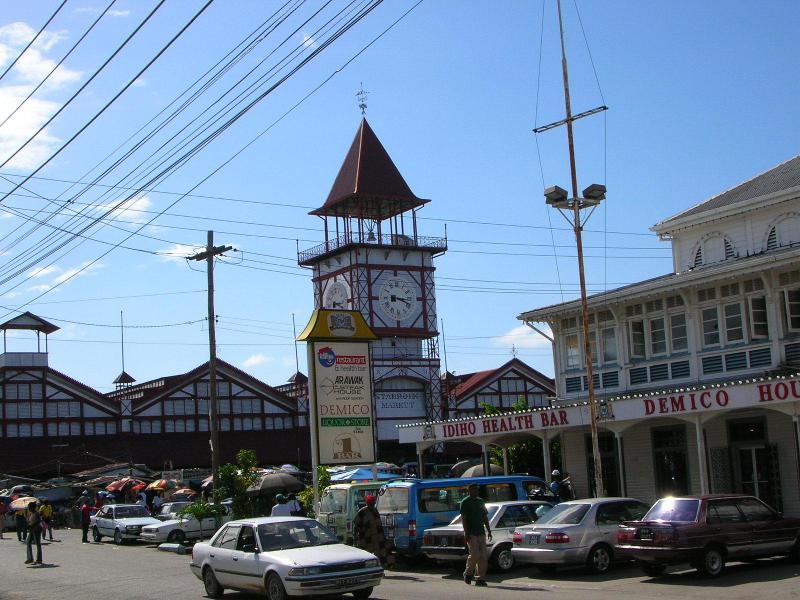
I've been a bad bad blogger. Sorry for the incredible delay in updating, but I've been a titch busy planning a trip to Guyana. Me and a group of terrific folks (I like that word, D, so there!) from all over this here continent will be going to that continent to work on a Habitat for Humanity building project. I'm the team leader-no laughing! I'm a competent individual. Honest!

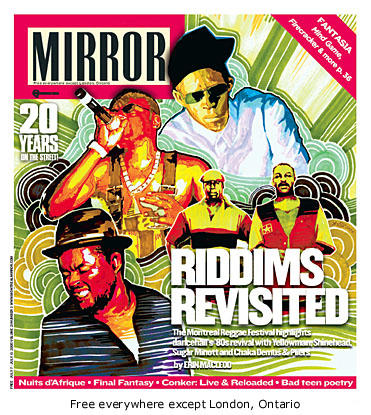
In more musically related news, I wrote this week's Montreal Mirror cover story on 80s dancehall...hope you like. I had a great time talking to Yellowman. I mentioned Wayne's work on the Mad Mad riddim (if you haven't heard his radio programme dealing with the migration of the Mad Mad do so here, then here, and finally here. I played it for one of my classes and they were super impressed) and he was quite pleased to learn of the longevity of his "Zungguzungguguzungguzeng" melody and insisted that his style has been used for more commercial uses: "Sounds and words can put together and make something good. Even as simple as, look at Mazda they use a little bit of sound: 'zoom zoom zoom hey zoomzoomzoom' just like that, you know?" Whaddya think, Mr. Marshall?

Anyhow, if you wanna read about the changes in the dance from the 80s till today as seen by Shinehead, Chakademus and Pliers, Sugar Minott and King Yellow, check here.

Thursday, May 19, 2005

Yet another reason I need to plan a trip to London soon...


The last time I was in London was in late June of last year. Disclaimer-pardon the pretentious jet-setting mentioned in the next sentence. I was on my way to Ethiopia and I stopped in for a bit to see my pals Joel and Dave. In the first hour I was in London I proceeded to leave my passport, all my identification, my credit cards and about 75 bucks on the tube. I've been told I should thank His Imperial Majesty, because, after crying my eyes out to the lovely fellow at Hammersmith station for a good half hour, someone had located my bag at Northfields.

Anyhow, my point is that though I'm an idiot, there are most certainly some fine folks in London and some of them are throwing a special version of their already special regular party, Heatwave vs Mas Fuego. Along with the usual mish-mash of dancehall, reggaeton, r'n'b, soca, Latin hip hop, reggae and zouk courtesy of resident DJs Heatwave (Punchline Records), Lubi (Nascente Records) and MDK (Twice as Nice), we gots some women holding it down: Lady Chann (Suncycle - dancehall/bashment), Criola aka Gemini (Latin Clan - reggeaton/R'n'B), No Lay (Unorthodox - grime/garage) and DJ Lexy Lu (Rethink London).

C'mon, if Time Out says these folks are "exciting new luminaries", dontcha wanna be there? Just don't forget your shit on the tube on the way over to Whitechapel-I've got a feeling that Jah's probably tired of locating the personal effects of scatterbrained music fans.

Just in case you need directions:
Friday 20th May 2005 @ The Rhythm Factory
16-18 Whitechapel Road, London E1 1EW
Tube: Aldgate East / Whitechapel
Buses: 25, 205, 254, N25, N106, N205 & N254
9pm-4am > £5 before 11pm/NUS > £8 otherwise