Monday, October 02, 2006

When I need a friend it's still you


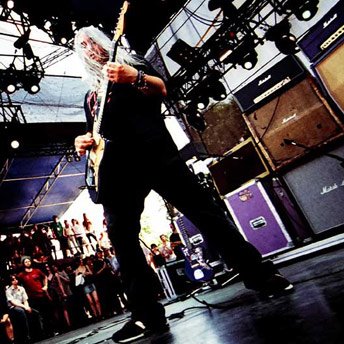
Okey dokes, so I was obsessed with Dinosaur Jr. for a great deal of my childhood/teenagehood/twenties (must I date myself?). Something about that guitar sound--Green Mind is still a terrific album. Anyhow, while I was working in publishing I got this great idea to do a book about Morrissey's fans--it really was a thinly veiled excuse to set up an interview with J Mascis, who I knew was quite the fan. Though the book never materialized, the interview did, and the resulting piece was only ever used as part of a school assignment; it was a project where I was supposed to "experiment" with journalism. This may perhaps be the first (and, frankly, last) piece of rock n' roll writing that I've ever done. It's bloody academic-y and I sound like a giant nerd. Also, when I think about this now, it does seem odd that I called one musician up to talk about someone else's music, but Mr. Mascis was kind and did humour me. Thanks to James for archiving this...5 years is a long time ago, eh?

J Mascis on Morrissey

The post-punk era - mostly seen as bereft of political ideas and motivated primarily by a desire to either sell records or make self-indulgent art - is also the era of the Smiths. Providing an interesting antidote to almost all other British music of the time, the Smiths provide an interesting response to the times. Instead of being overtly political and anti-government, there is, I feel, a tremendously individualized resistance detailed in Morrissey's lyrics. It is subtle sometimes, other times more overt, but always insisting on positioning himself on the margins - refusing to fit in and blindly accept traditional views, morals, and ideas.

Perhaps that's why hardcore punk guitar hero J Mascis of Dinosaur Jr is such a big fan. I always thought that J Mascis's covers of songs originally performed by the Smiths were somewhat out of keeping with his normal punky fare. In addition, I've been interested in how people come to the Smiths and Morrissey and why they enjoy the music and lyrics so much. A multi-faceted and constantly evolving individual, Morrissey seems to open himself up to all sorts of fans - each one believing that Morrissey speaks to them individually. As a result, his public positioning as well as his lyrics are constantly interpreted and re-interpreted. I thought it might be an idea to ask J Mascis where he stood.

EM: The release of Dinosaur on Homestead in 1985 nearly coincides with the realease of The Queen is Dead in 1986. I enjoy both of these albums, but they are obviously very different. What kind of music were you listening to back when you started performing? Were you at all interested in the Smiths at that time? What has been your acquaintance with their music?

JM: I first saw Morrissey on the Cutting Edge TV show on MTV. He seemed quite annoying, like he wanted to be punched. I wasn't inspired to pick up any of [his music] at the time. Then, a friend in college went to see the Smiths--he was a heavy anglophile. He said they were great. I nodded in disinterest. I first got interested in their music when "Girlfriend in a Coma" came out. I thought it was really funny and I liked that it was short. I had heard "How Soon is Now" and I really started liking that song. I also liked the other video that popped up at the time - "Stop Me (if you think you've heard this one before)." My interest gradually became more and more til' I realised the genius of Morrissey. I was listening to the Birthday Party, Wipers, New Order, and Dream Syndicate at the time Dino started up. When I started doing publicity for Where You Been in England I got all their albums on 10" at the Warner office. I guess they had just bought the Smiths catalogue from Geoff Travis. That's when I first heard The Queen is Dead.

EM: Writers often list Sonic Youth and Neil Young (sometimes even Led Zeppelin) as influences for Dinosaur jr . Would you say that you have been influenced by the Smiths?

JM: I'm not sure how influenced by the Smiths I have been. I don't play like Johnny Marr or sing like Morrissey, but I love them.

EM: Having recorded covers like "Just Like Heaven" and "Show Me the Way," was there any particular reason why you chose to cover "The Boy With the Thorn In His Side"?

JM: I guess I was really getting into the Smiths at the time not realising that everyone already loved them. You know you get into a band and it seems like you discover it and no one else has ever really been into it like you were. I'm playing in england and every American band does a Smiths cover as if the English will be really impressed that you know this cool English band, but they're just bored. "Oh no not another American saying 'I'm cool, I dig yer people, I get it, English right?'" I didn't realize it was boring and uncool til' later so I still had a genuine enthusiasm while playing it. Americans still love to cover the Smiths - it's just not as tiresome over here. We weren't beat over the head with Morrissey in this country. He still seems cool.

EM: What is your favourite Smiths/Morrissey song? If you were to make a mixed tape with Smiths/Morrissey songs, what songs would you put on it?

JM: It's hard to pick a favorite song - it changes. Maybe "Panic." I like "Last night I dreamt somebody loved me," "Ask," and "Some girls are bigger than others."

EM: As an American hardcore/punk/grunge/indie pop figure (sorry to categorize), your version of a Smiths song raises questions about the influence of the Smiths in the US, and their influence on other musicians. What do you think the impact of the Smiths/Morrissey has been within the states? Can you think of any unlikely bands/musicians that have been influenced by their music?

JM: People I know seemed to start liking the Smiths after they broke up. They were a little too much for people at first - you had to ease yer way into them. Like, Henry Rollins would talk about wanting to beat up Morrissey and Robert Smith. The English camp takes a little getting used to after being a testosterone filled hardcore kid. Still a lot of my friends think the Smiths are too wimpy, but those who love them really love them. I thought it was funny when Choke from Slapshot really got into the Smiths and Slapshot started covering "How Soon is Now." He was the "hard" in "hardcore" - they didn't come much harder. Suddenly it was OK in Boston for hardcore kids to love the wimpy Smiths as well as loving hockey.

EM: Morrissey's fandom decreased in the UK after the break-up of the Smiths, but he gained popularity in the US. Granted, Morrissey still enjoys international recognition (enough to be named the most famous artist without a contract by Mojo magazine) Why do you think that Morrissey has such an enduring popularity?

JM: He's extremely talented - a great singer and lyricist. Why would people stop loving him?

EM: Have you ever met Morrissey? If so, what did you think of the man? If not, do you think you might get along with him?

JM: I never met him. I would hope we would get along famously after having 5 or 6 tea times together.

[EDIT: Whoops! I guess I was wrong...I did write this. Oh, and I couldn't help myself:]

Tuesday, September 26, 2006

I am not a human being


So I interviewed Lee Perry last week. The attached video will give you a wee sense of the experience...
I now have to figure out some way of translating what many might call genius, but what seems to me to be, well, I don't even know. At the end of the interview--which was hard to end, because Perry kept telling me that he had more time to talk--I was a little speechless. For those of you that know me, it's probably hard to imagine.
Is he a genius? Of course. Is it possible to demonstrate that genius over the phone from Switzerland? Probably not. I have now, however, been made aware that Scratch is not only from the countryside of Jamaica, but he's from the Ice Age. This statement does indeed contradict the above commercial pronouncement. In addition, of course, he's also not a human being. Cue Mad Professor.

Wednesday, September 20, 2006

I've got a bag full of sleng teng and aint nothin' gonna stop me

I've just been listening to Rodigan's radio clash with Barry G from 1985. From the beginning, when Rodigan calls the Half Way Tree police station to have an officer toss a coin, determining who drops the first dub, you know it's going to be wicked. Though Rodigan starts it off well, Barry G immediately kicks it up a notch with an Echo Minott sleng teng dub. Roddy hits right back.

The man isn't called Father Rodigan for nothing.

In the above video he's playing one of his famous dubs--I'm sure Love Injection was killed dead. And though I've recently become obsessed with YouTube dance videos (see here, here, here, here, here, and here), it's Rodigan's dancing that rules.

Sunday, September 17, 2006

Gotta love the Northern soul...

As promised...a couple of lovely tunes from Ms. Clark. Enjoy--thanks to Vero!
Don't You Care


Never Did I Stop Loving You


I think they both work now...

To much listening, not enough writing

Because this album is too much greatness to deal with at the moment. If I can figure out the mp3 posting scenario (help me, pretty please!) maybe I'll post something fun this aft. But, my goodness, I should be writing.

Thursday, September 14, 2006

A photo taken at Dawson yesterday

Photo from cocolinda's flickr. It's what I wish I could focus on in reference to yesterday. Thanks to all who called, concerned for my safety.

Monday, September 11, 2006

Apart from the obvious commemoration going on today...


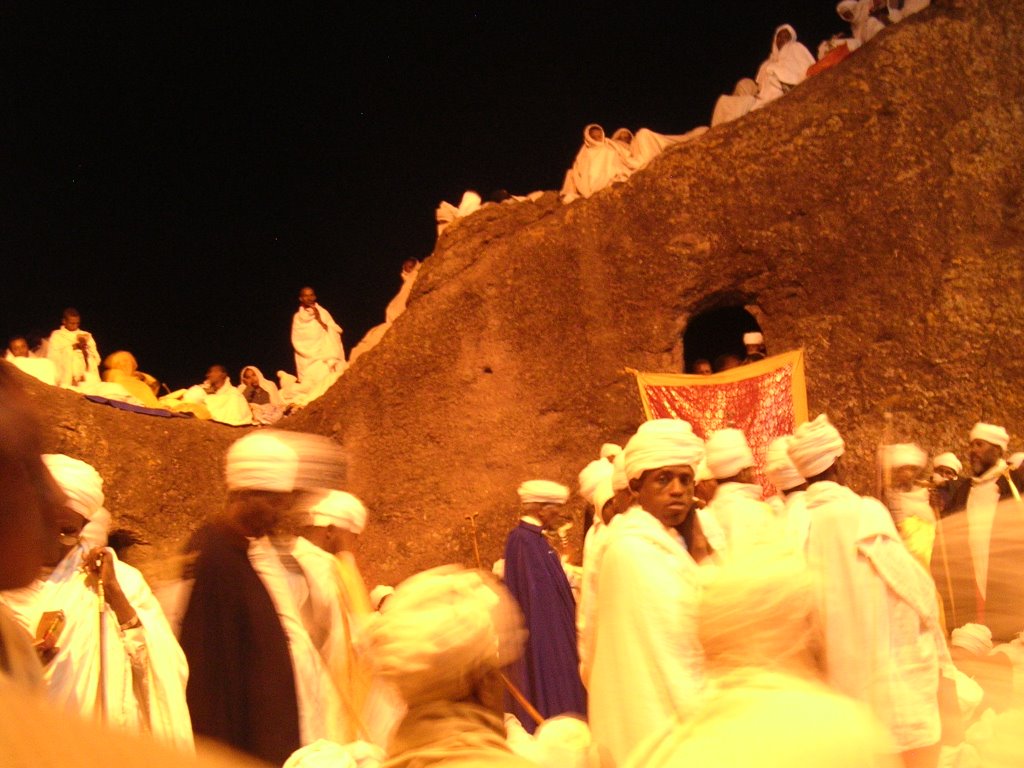
Melkem Addis Amet! Today is the beginning of 1999 in Ethiopia. In celebration, I give you one of my favourite photos of Ethiopia--it's picture of Christmas celebrations in Lalibela.
For those of you who are unfamiliar with the Ethiopian calendar, it's based on the Julian calendar, unlike our western Gregorian calendar. There are twelve months, each with 30 days, and a thirteenth month with between five and six days--depending on whether or not it's a leap year. Today marks the celebration of Ekutatash, and the first day of Meskarem. It also, however, marks the beginning of the big countdown to Y2K for Ethiopians.
Multi-billionaire Al-Amoudi, who, many would argue, might be better off spending his money on more significant projects, is installing giant countdown clocks in Ethiopia, readying the country for its entry into the next millenium. Rastafari have told me that we should pay attention to this, the "real" year 2000. Hmmm...
Hopefully next year I'll be there to see just what might happen.

Saturday, September 09, 2006

Now this for Vero

Not as nice as yours, but it's an attempt.

Friday, September 08, 2006

Tomatoes in Chelsea


I took this for Aurora.

Thursday, September 07, 2006

Talking Will Holland's ear off Part 1

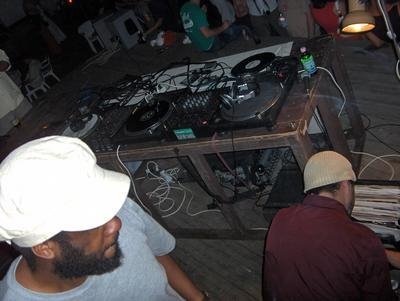
In the above photo, which, admittedly, tends to showcase the turntables more than anything, is Andy Williams at left and Will "Quantic" Holland at right. I just sorta liked the photo-thanks to cratesoul.kepeim.hu. I think I want to go to Hungary now.
Anyhow, as promised, here is the interview I did with Will (using the first name sorta takes away from my journalistic mystique, eh?) this past weekend. I'm cutting it in two because it's quite long. An extremely short version appears in the Montreal Mirror today. I haven't really edited much of this, so I sound pretty blather-y, if that's a word. I tend to get a little excited when I get to talk to people who've been to Ethiopia. I'm a dork that way. Anyhow, on with the show. If you don't know who Quantic is and what he does, you should. His music is simply terrific, and he seems a darned fine fellow to boot.

EM: I see you as taking the concept of crate digging to a whole other level. What do you look for?

Q: I think that the basic form of crate digging where it’s basically looking for breaks, drum breaks to loop up or to sample and things, and then I think that once you do that for a whole [laughs] you just get in to music more. And you get into it a little more deeply; you get in to all kinds of music, regardless as to whether it has a drum break in it or whether it’s a funky record or not. So myself, and probably Miles [Claret, of Soundway records] also, are both looking for quite eccentric records, and definitely dance records. Something that you can play out in a club and it will go down well and be played up to good effect, but also something a little eccentric so it could be a calypso record, a salsa record, an afrobeat record, but it has to have something interesting about it.

EM: You travel around a lot. It seems like you want to go to the source of the music you like—take, for instance, Ethiopia’s Mulatu Astetke.

Q: Well I guess—I’m actually sitting here with Miles now—and I guess the thing is, all of these things start off in record room, it a kitchen, listening to a record, and going “Oh my God! This is amazing. How was this made? Who made it? Where do they come from?” Miles had of those moments a few years back and said, right, I’m going to go to Ethiopia and he bought the ticket to Ethiopia. And we were just sitting around one night and [Miles] told me he’d gone pretty briefly, but he’d found some nice records. We just decided to go again, with the premise of trying to track down Mulatu for an interview. So we interviewed him for Wax Poetics. And also we wanted to do a potential sounding out of whether we could do some recording over there. Which actually, we haven’t done yet. It’s all kind of gone a little bit wrong. I mean, it’s gone well for Mulatu, because he’s got this “Broken Cloud” track and he’s got a lot of interest through that. But it’s becoming increasingly hard to pin him down, to set dates, because he’s a very busy man. But as far as getting out there, it’s just the case of buying a ticket and just kind of winging it, really. [laughs] Actually, Mulatu really took us under his wing.

EM: Ethiopians tend to be nice like that!

Q: Yeah. You know, all these places, some are heavy places to go to, but people are really friendly. I think it’s like anything—when somebody’s taken an interest in your culture, unless you’re robbing or something, but this is something that we are promoting and trying to keep the knowledge of this music alive. A lot of these forms of music are dying out. A lot of people don’t want to being learning to play drums in Africa, they want to use a drum machine.

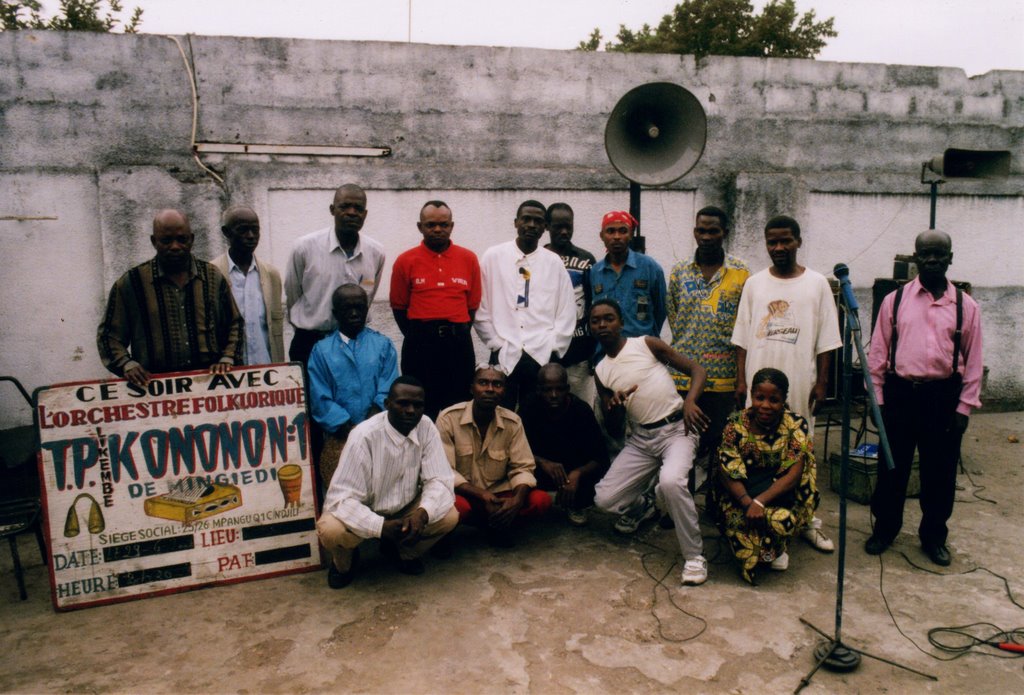
EM: Vincent Kenis, who’s worked with Congolese musicians, most famously, Konono No. 1, he said that in Kinshasa, none of the young people really want to listen to the traditional music. In Ethiopia, it’s the same, everyone wants what’s new—the latest Amharic pop music. When I’ve asked kids about Mulatu Astake, they’ll say, “Oh, my parents like him, we like Teddy Afro.” In Ghana as well, there are not a lot of people listening to the tracks found on Soundway’s compilations. It’s like you’re resurrecting the past—do you feel that you should focus more on contemporary tunes?

Q: For me, I’m interested in real music and music played in the room with an atmosphere to it. Just because I like Puerto Rican Rhumba records from the 60s doesn’t mean I have to like reggaeton. For me, the two things are so far removed. [Music] just becomes a generic culture that doesn’t have any roots in [a cultures] own heritage. With reggaeton, a lot of the time it is a just a dancehall riddim. There are interesting things, modern Caribbean records; I have found some nice modern Ethiopian stuff, but only a few. To be honest, I really like drummers and I really like live music. And I like things nasty, kind of messed up, in a way that it gives it character. And I think what you’ve got to remember with these older recordings is that they were made in really unique times.

EM: Yes.

Q: You had army bands and military bands, police bands—especially in Ethiopia. All these bands were part of clubs and I don’t know whether you’d get a recording now from twenty Nigerian policemen, playing a funk track or an afrobeat track or a high life track. I don’t think that’s happening any more. I think it’s about getting kinds who are into music aware of that olds stuff and how they can add that into their music and not do some kind of “Mr American” style thing, trying to be a rap star. Instead, be more in keeping with the music that they’ve come from.

EM: In Ethiopia, even though kids like modern stuff, there is still quite an appetite for not Mulatu, but very traditional Ethiopian music. Played on the masinko and krar, in a pentatonic mode that’s really different than what Westerners are used to listening to.

Q: Yeah, I like that stuff! [laughs] I remember I went with Miles and Mulatu to this restaurant in Addis and they had the traditional players playing that stuff on krar and we had to get up and do this dance, you know, with the shoulders.

EM: Of course!

Q: And Miles was thinking, god, we came to find Mulatu and here we are shaking our shoulders to the krar. I think though, it’s interesting and it’s all part of the music I’m interested in and so is Miles as well, is that point where all these forms of folk music were becoming modernized. Maybe they were trying to be a little more commercial, trying to be a little bit more turned into a product.

EM: It’s as if you’re looking for links. With Mulatu, you do hear the minor strains so common to Ethiopian music, mixed with other influences. With early calypso, you hear the traditional chanting. It’s almost like being a musical archeologist.

Q: Definitely. I think it’s just looking to see what spices were turned into pop a long the way. With Mulatu, you can hear Chinese music in there and you can hear all the Puerto Rican rhythms that he picked up in New York. And you can hear the fact that he was in London playing with jazz guys. I love going on these trips because you hear just the strangest music.

Part 2 to come...

Sunday, September 03, 2006

Thank-you Heather

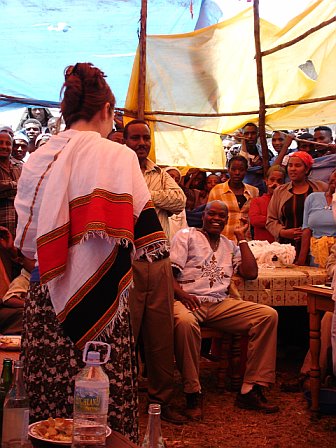
Here's a photo of me giving a speech in Amharic--the second speech I've made in the language. It appears from the photo, taken by Heather (there's a link to her blog at left), that either the content of the speech or my brutal pronounciation is particularly hilarious. All this to say that I think it's pretty indicative of something...
Coming up this week is a long version (sorry Julie!) of an interview I did with Quantic. Sure, I may have forced him to talk a little excessively about Ethiopia, but those who know me, you gots to know I've got a little thing for that country and any one who happens to have visted there. Any opportunity to talk about it...gawd, if this blog is any indication, I should perhaps keep my flaming mouth shut. You'll again witness this particular problem I have probably on Thursday or Friday. Until such time, buy Quantic's new album, or any of his albums, or Mulatu Astetke's albums. They're all quite great.

Wednesday, August 30, 2006

"The sun makes its orange way east from Arabia, over a Red Sea, across volcanic fields and desert and over the black hills"

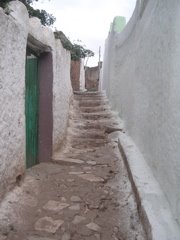
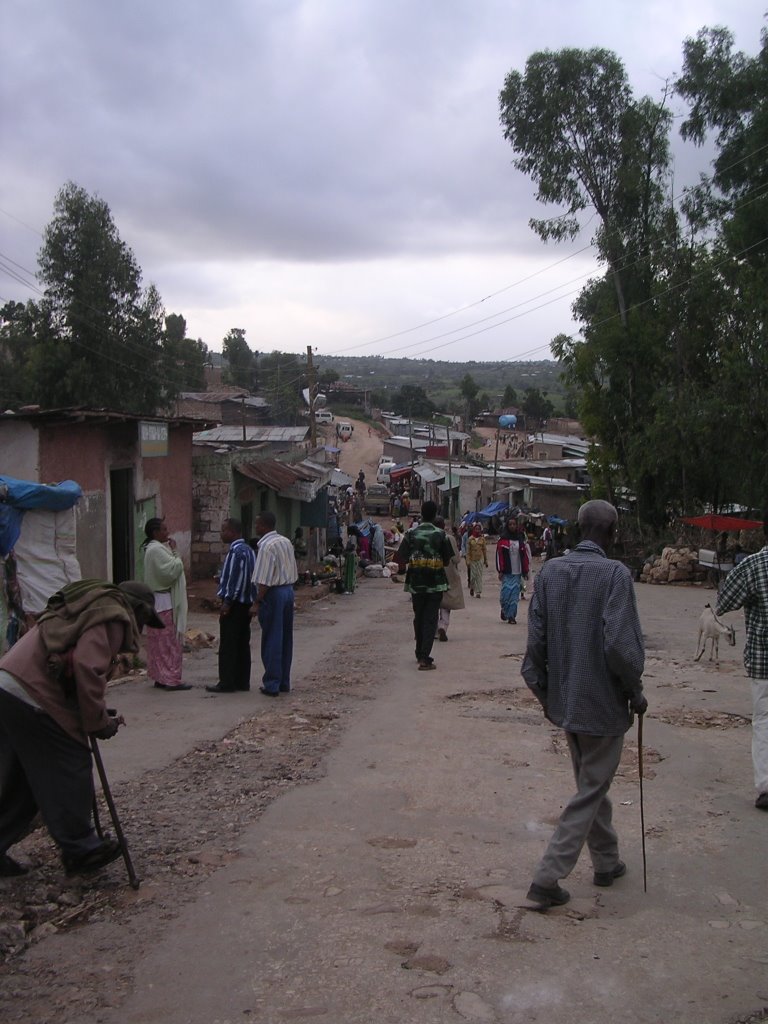
As a result of my outburst of photos from Harar, I was asked to provide a little more explanation. I've been to Ethiopia three times now, and everytime I travel there it never ceases to provide me with endless ideas for stories I need to write. Also, travelling there seems to remind me that there's just as many opportunities for story writing around the corner from my apartment (though one might have to get out of earshot from the incessant jack hammering, a sound that will eventually result in some monstrous condo development).

The project at the moment is to record, as best as possible, the events of a particular evening/morning in transit from Addis Abeba to Harar. Perhaps some of you have already heard the tale, but I don't think I've really told it well enough as of yet. A little paranoid about subject position, am I.

Sunday, August 27, 2006

Photos of I-thiopia

I am writing about Harar at the moment. It's tough not to compare my thoughts with those of Camilla Gibb, though really there is no comparison, given that she's the brilliant Giller Prize-winning author of Sweetness in the Belly and I, well, I aint no brilliant author. There is something, however, about Harar that makes you want to write something down. I just don't want to forget.


Thursday, August 24, 2006

I really wish I could find my "Everything Reminds Me of My Dog" t-shirt


Jane Siberry has given away all of her possessions, changed her name to Issa and is now teaching science to students out in BC. She's kept 20 books and 20 cds--the rest of her possessions can fit in a small suitcase. Now, I'm not suggesting that everyone do this, but I don't think it's really that crazy. Kooky, but not crazy. I forgot how great she is and I'm glad that I've been reminded.

Thursday, August 17, 2006

If you start out depressed, everything is a pleasant surprise.


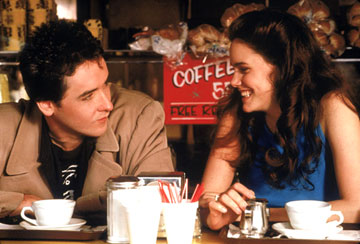
On Vero's blog (have I mentioned how fantastic her new site looks? Well, it's worth mentioning again), she mentions a conversation at Caro's barbeque in which the title of "best girl movie of all time" was given to Dirty Dancing. Now, as someone who, in grade eight, was tickled pink to be the principal dancer in a number choreographed to "I had the time of my life", I understand the film's appeal. Excessive high-kicks notwithstanding, I thought that the film that breaks the barriers of religion and class through dance, bad dialogue, and Swayze was the coolest thing ever. And then I saw Say Anything.

Instead of making an argument for Say Anything as the "best girl movie of all time" (and by "girl" I mean the same angsty, boy-crazy girl audience for Dirty Dancing), my question is how could you argue that it's not? First, who is better than John Cusack. Of all the actors in the past 20 years, has there been a male lead as consistently well loved as Mr. Cusack? From The Sure Thing to High Fidelity, the man with the narrow face, small mouth, and pouffy hair seems to have maintained a level of adoration amongst female fans that is really quite astounding. Or, given the fact that the role of Lloyd Dobler presents itself as the ultimate boyfriend for heterosexually inclined girls all over the place, any role since 1989's Say Anything has essentially been an opportunity to imagine Lloyd on the screen again. Maybe it's just me.

For those who read Catcher in the Rye and fell in love with Holden, Lloyd provides an excellent substitution--hold the insanity.

Even the silly tag line on the box declares the truth: "To know Lloyd Dobler is to love him. Diane Court's about to get to know Lloyd Dobler." Sure, it's a simple movie: boy loves girl from afar, courageously asks girl out, girl likes boy, girl's dad wants girl to focus on school, girl breaks up with boy, and boy gets her back in the end. But it's got Lloyd Dobler.

A friend asks Lloyd how it was possible to get a date with Diane Court, the picture-perfect valedictorian and the response is simply "I'm Lloyd Dobler." Indeed. Of course Lloyd Dobler would get the girl. And the girl is played with with such non-committal grace by Ione Skye that it is possible for any teenage girl (or teenage girl at heart) to simpy imagine themselves in her position. Especially when that position involves a boy wearing a Clash t-shirt standing outside your window blasting Peter Gabriel's "In Your Eyes." But, though that is the obvious climax of the film, Say Anything also presents itself with some of the best and smartest writing in teen-flick history.

When Lloyd answers Diane's father's question about future career plans, his answer (nervously spouted, because, of course, Lloyd has "that nervous talking thing") is as follows: "A career? I've thought about this quite a bit sir and I would have to say considering what's waiting out there for me, I don't want to sell anything, buy anything or process anything as a career. I dont want to sell anything bought or processed or buy anything sold or processed or repair anything sold, bought or processed as a career. I dont want to do that. My father's in the army. He wants me to join, but I can't work for that corporation, so what I've been doing lately is kick-boxing, which is a new sport...as far as career longevity, I dont really know. I cant figure it all out tonight, sir, so I'm just gonna hang with your daughter." Classic.

Lloyd's pitch-perfect awkwardness matches the brilliance of the film's small details--from the fact that the kids, adding a touch of realism, actually have to yell at each other to be overheard at a party (why to movie-makers think that these teeny details aren't important?), to Lili Taylor's immortal performance of "Joe Lies", to the use of The Replacements' "Within your reach" as the final song--everything about the film just works.

If, as Lloyd postulates, "the world is full of food and sex and spectacle and we're all just hurling towards an apocalypse", watching Say Anything makes it a little bit better--as cheesy as that may sound.

Tuesday, August 15, 2006

I've gotta get back to business

In addition to trying to blog a little more and updating this whole situation so it's more of a website type thing (really it's because I'm desperately jealous of Vero--check her new site and you will be too) that makes the attempt to dispaly my saleable talents. Before all that, however, it's getting to the time when I can start watching Coronation Street again. I've been neglecting the show on CBC ever since I started downloading and watching the future. The show, for those of you yet-converts, is a brillant Brit-soap that we in Canada, regardless of the fact that we live in a world with the capacity to instantly email videos of explosions, are forced to watch shows broadcast in the UK nearly nine months ago. I made the mistake--seriously, it didn't seem that way at the time, but that's because one episode is a gateway drug into obsession--of indulging my desire for the future and it has since ruined me for present day life on the street. I think, taking it day by day, I have only a few short weeks and I'll be fully back on the wagon. And then, please leave me in the dark about the goings-on with Gail, Fred, Tracey, Charlie, Ashley, Vera, Roy, Hayley and the gang...I think it's better for my mental health that way.

Wednesday, June 28, 2006

Moi, j'ai parler a Vincent Kenis


Due to an inability to get through to Blogger while in Ethiopia, here is the long delayed interview, as promised, with Vincent Kenis, producer of the Congotronics series. It an interview that is in the Mirror as a run up to Konono No. 1's performance at the Montreal Jazz Fest. I could only use a tiny bit of the following interview, but I really found Kenis interesting...I'd like to speak to him again sometime.

EM: You initially heard Konono No. 1 on the radio in the late seventies and then went to the Congo to find them in 1989. What drove you to do this?

VK: I already had some experience with modern Congolese music. I had been there in ’71 and stayed one week in Kinshasa. I was really intrigued by popular Congolese music. I heard all sorts of stuff—tradi-modern music. So, in ’79, when I heard this it was like a concentration of everything. At that time I was playing in a New Wave punk band with a lot of emphasis on distortion. I also played a lot with Congolese artists such as Luambo Franco and OK Jazz and Koffi Olomide. So this led me to be sensitive to Congolese music in general. There is, of course, wonderful traditional music.

EM: Is there anything that characterizes Congolese music?

VK: When it became popular in Africa in the sixties it was mainly guitars with echo and delay with very sweet harmonies. And there was a very lively second part when people get on dancing and the horns were more prevalent in the 70s. On top of that, Congo is like a subcontinent. It is huge. Kinshasa is a capital of a huge area of traditional music which is constantly fusing, and this is what makes it so strong and so fascinating, for me.

EM: Band leader Mingiedi has been quoted as saying that he needed to amplify his likembe to compete with city noise. What do you think about this pragmatic need to connect traditional music with technology?

VK: They make music with what they have. And they happen to have that kind of equipment and to circumvent it to get a new sound, a new way of playing the music. In the beginning, you need to find what sounds the best, what sounds the loudest. After a while, they just choose between all the junk they have—what junk sounds better than the rest of the junk. Now they are opening up to new sounds, new possibilities. They never had a proper PA before, and it’s a question of balancing the ugly, dirty sounds they always had with more comfortable sounds. Also, they never had good bass amplification. It’s not like in Jamaica, you don’t have soundsystems that big in the Congo. It’s always a bit tinny, happening in the mid-treble. They discovered sub-bass and have been getting into it, exploiting it. It’s really interesting. The sub-bass element of their music was really suggested while we were pre-mixing the stuff right after the recording sessions. It was quite a novelty, the technology.

EM: As a producer, from the west, going to the Congo, recording music, what are the challenges for you? How do you view your role?

VK: Myself, I have an experience as a Congolese musician, so to speak. I discovered Congolese music through the Cuban side. I have no colonial past, personally. I met Congolese musicians because they played in the same Afro-Cuban bands as I did. So I became friends with a lot of people and people know me in the Congolese music circles as the one white guy who played with Franco. I’m part of the family. I’ve played in Kinshasa with a lot of people. People know me for being that before they know me for being a Belgian. They don’t care if I’m a Belgian or not, as long as I can make them laugh! (laughs)

Of course we discuss and we have our views on politics, but, you know, I’m not the king of Belgium. It’s not a problem.

EM: How important do you think it is to have an understanding of the place, the context in which music is created?

VK: The more music travels, the more it needs to state where it comes from. I’m really excited about internet possibilities, to help join the diaspora from the Congo. That is one of the plans we have, to play music with people from Brazil, Belize, and Cuba. We send them the songs, they send us back overdubs and we decide with the musicians how it is going to be.

People tell me about the DVD that they understand the music so much better after they saw the pictures. It suddenly makes sense, you know? Some sounds, the drums are really complicated, but as soon as you see the dancer dancing to it, you see that it is a very very rigorous and very skillful affair and you just get captivated. You have to show where you come from.

We’re in the process of mixing, for instance Kasai Allstars is a mix of all different groups who had never dreamt of playing together until this Belgian idiot, this naïve guy, said “Why don’t you play together?” They said, “but we don’t have the same scale.” I said, “why don’t you build a scale and transfer the scale of the other guy and I’ll pay for it?” You know, get together and it’s a constant flux of cultural action between these musicians. And this is the way it has always been. They are not really tribalistic in that sense. For example, Swede Swede, which I produced a long time ago was supposed to be a pure group from the Mongo region. But the lokole player, lokole is a really traditional Mongo drum, was from Kasa, a completely different region and he was well accepted. This is in Kinshasa, I don’t know about the rest of the country, except for the south part. But Konono No. 1 are very much into experimentation and new things. And they are senior citizens! They are not into tribalism. But I hope it doesn’t come back with the elections, that’s my fear.

EM: With the positive things about technology, there must also be a negative side?

VK: Of course there is going to be more experimentation, and there is going to be more challenge from that. The founder of Konono No. 1 is 73 years old, he is not going to change a thing. But the rest are open to many new things and technology. Maybe they have never thought of their sound as an object to watch, to compare to others. They see now and are quite conscious of textures of sounds in records they hear [in Europe]. They know that their distortion is unique.

At first, it was a question of prestige. “I am the boss I must have the big amplifier, no matter what it sounds like.” It had nothing to do with an experiment with the music

As soon as you go through this and you say, hey we are making music, lets be comfortable, let’s try this, let’s try that, I think technology just finds its space naturally, The fascination for technology lasts as long as you don’t talk about music. And I’m there to talk music, to propose sounds, to propose solutions. The fact that I have the computer and I can mix all the time with them, the object is in the making and the question is what do I want it to sound like. It is not a question of technology versus tradition. It is just making a musical object that works. And that’s it, and that’s what my ambition is.

EM: Konono No.1 has been around for quite some time and, apparently, is seen as passé. What do you think about new music coming out of the Congo?

VK: I wouldn’t want to describe it, actually. It seems to be quite stagnant at the moment. I must say, I haven’t been around Kinshasa as a talent scout for a very long time. I’ve been just working with people I already know for the last three years. I’ve heard there is a hip hop scene growing. But, the main thing you hear in the streets, for my taste it is terrible, religious music. The new churches are really powerful there. They are the only ones who can afford big PA systems so they are really loud and they play gospel, basically. The last authentically Congolese group, and I use authentic knowing that, in the Congo, it is suspect, its members are at least forty years old, so the younger generation has nothing to refer to, so they take what’s around. So it is gospel music. They get into R&B also, but this is only the rich kids and there are not so many [of them]. Most of the people just play music with what they have. They invent instruments in the backyard and anything goes. It is a very very poor situation in Kinshasa. I’ve been in Bamako, [Mali] it looks like Switzerland to me compared to Congo. Not so many people have access to the outside world and they haven’t been used to look for it. Now they have to because nothing much is happening.

EM: Does the international popularity of the Congotronics series get back to the Congo?

VK: Maybe not now, maybe later. I think the new generation is bound to like this sound very much. Because it is really close to what hip hop or dance music sounds like when you have nothing at all but chairs and brooms and stuff like that to hit on. This music is unique in the world and they are going to incorporate it, I am sure. I hope so, anyway! If not, we’ll make some in my basement in Brussels.

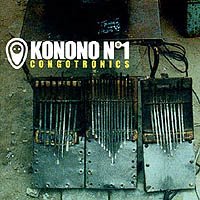
Konono No. 1

Last year, I wrote the following review. I'm posting it here because next week I'll post a long version of an interview with Congotronics series producer Vincent Kenis. Also, this should remind any of the three people that read this blog that they should run, not walk, to get tickets to see Konono No. 1.
Konono no. 1
Congotronics
(Crammed)


I'm a big fan of loud music. When I say loud I mean King-Tubby-overclocking-amplifiers loud. Any piece of music, any sound, from banjo to bass beat, takes on a whole new life when it is cranked up at top volume. Sound, sound and more sound. Konono no. 1, a group from an area of Africa between Angola and the Congo seem to understand this very well.

Mingiedi, who founded the group 25 years ago, is a likembe (thumb piano) virtuoso of the highest order. Konono no. 1 make use of three likembes, a rhythm section, three singers, and three dancers. The sound is pumped through makeshift amplifiers and speakers that have been carefully culled together from old car parts. Bits and pieces of cars drive (pardon the pun) the rhythm section with hubcaps and other scraps of metal--including old pots and pans--acting as cymbals, drums, and other assorted noisemakers. Needless to say, you probably haven't heard anything else like this. Ever.

Whistles and song collide with dizzying, crashing rhythms, creating music that is nothing short of amazing. It's essentially super-charged traditional Bazombo trance music, but it sounds like something you wouldn't be surprised to hear paired with a touch of M.I.A.'s "Galang Galang". I don't mean to suggest that this is pop in any way, shape or form, but it's serious, bass heavy dance music, with a punky, rockus edge. Some have compared it to Autechre, some have drawn comparisons to Diamanda Galas. Whatever it is, these guys have been at it for years and they certainly know how to move a crowd.

I, for one, am excited to know that Crammed disc's Congotronics series doesn't begin and end with this record. There's more where this came from. So throw it on the CD, crank up the bass, and don't worry about the neighbours.

Wednesday, June 14, 2006

This isn't too much fun...

I tend to read the blog Meskel Square quite a bit. It's by British journalist Andrew Heavens, who happens to live and report from Addis Ababa. In recent weeks, Heavens (who is also a pretty incredible photographer btw-check the picture of a child in Harar that accompanies this entry) has blogged about how the Ethiopian government is censoring the internet. Numerous blogs, in fact all that utilize the Blogger platform, are inaccesible from within the country. There goes my idea to write about my trip while in Shashemene next month...

This action is indicative of a much larger problem than simply thwarting my silly travel musings. Amnesty International, alongside the Observer, have begun a campaign called "irrepressible.info" bent on ending online repression of speech.

Read about it, and then stick one of these on your blog: